
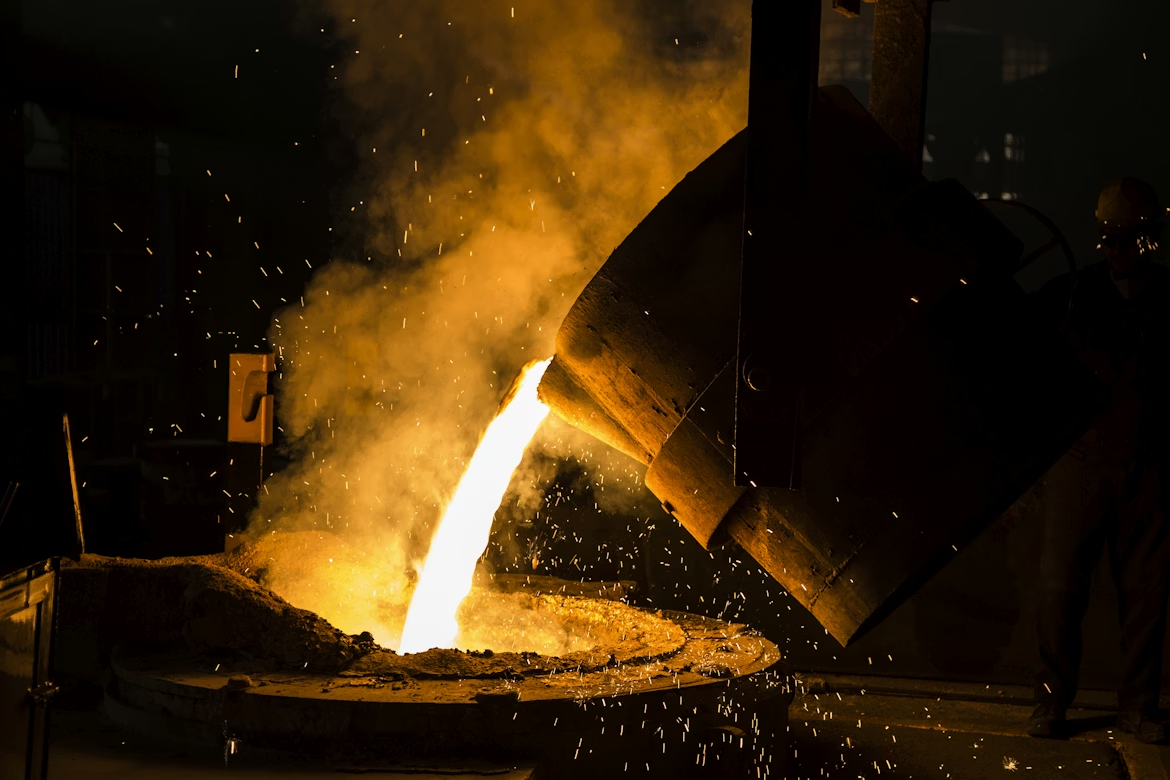
The steel industry entered 2025 expecting protection, but the Trump administration’s early moves under Section 232 landed like a blunt instrument on its own value chain. In February 2025, the White House moved to restore a true 25% tariff on steel imports and lift aluminium to 25%, while widening coverage to downstream and derivative products and tightening rules around reporting and exemptions. These steps disrupted flexibility for manufacturers that rely on specialised grades not readily available domestically. The predictable result was that the immediate shock concentrated less on foreign mills than on U.S. steel-consuming industries such as automotive, construction equipment, appliances, and energy tubulars, where metal is a major input and contracts reprice quickly. By June 2025, tariffs were increased again to 50% on steel and aluminium, with the UK carved out at 25%, widening the price gap between U.S. and overseas markets and raising the likelihood that protected upstream producers would benefit while downstream firms lost competitiveness.
Now, with 2026 underway, the political economy is catching up to the industrial policy: the administration is reportedly considering relaxing some of the steel and aluminium tariffs on selected goods as cost-of-living pressures intensify. Internal concerns suggest the tariffs are raising prices for everyday metal-heavy items such as food and drink cans and pie tins, with public frustration increasingly evident in polling and approval rates on the handling of living costs. The logic of a selective rollback is straightforward. Broad, hard-to-administer tariffs on thousands of derivative goods behave like a consumption tax that is difficult to target, often hitting domestic fabricators first because they cannot easily substitute away from metal inputs. In effect, a policy designed to punish foreign overcapacity can end up taxing U.S. manufacturing density, precisely the ecosystem needed for reindustrialisation.
Steel is not alone. Other metals have been pulled into the same meltdown, sometimes by tariffs and sometimes by the cost structure of producing them in the United States. Policymakers treated refined copper differently by exempting it while targeting semi-finished copper products, while aluminium faced 50% tariffs, yet the main constraint on rebuilding U.S. smelting is often electricity cost rather than import pricing. That same energy-and-capital reality resonates across industrial metals: tariffs can raise domestic prices quickly, but without reliable low-cost power, faster permitting, and investable long-term demand signals, they do not automatically create globally competitive capacity. Instead, they risk forming a high-price island that erodes downstream manufacturing. A stronger path to industrial resilience would be a two-track reset: maintain genuinely strategic, narrow measures such as targeted national-security investigations and anti-dumping enforcement while carving out broad exemptions for downstream consumer and industrial essentials, then pair those actions with an aggressive competitiveness agenda centred on industrial power pricing, grid expansion, streamlined permitting, and investment incentives tied to productivity, workforce training, and advanced steelmaking so U.S. metal becomes cheaper to produce, not merely protected by law.
Sources: BCG, Reuters, CFR
Photos: Unsplash
Written by: Ariff Azraei Bin Mohammed Kamal